
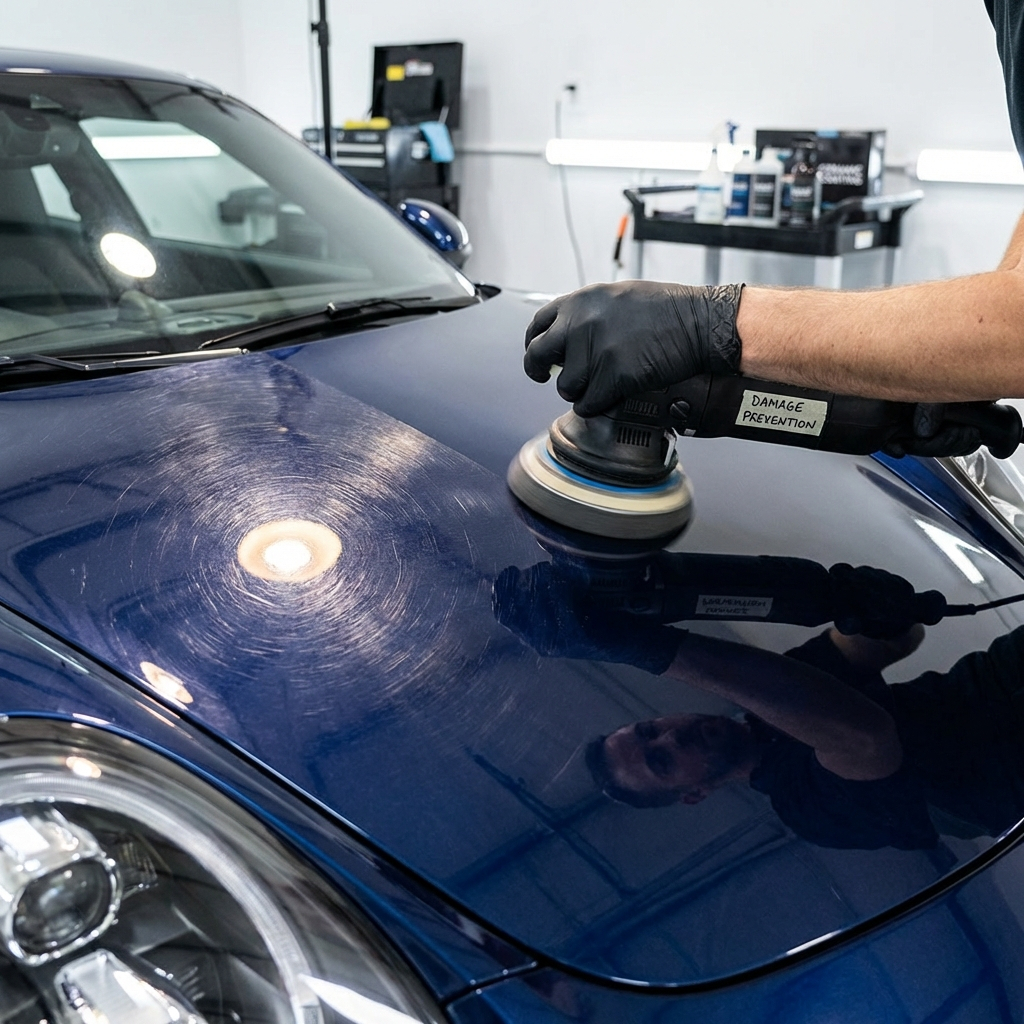
What Dealerships Actually Do to Your New Car (And Why Smart Owners Skip It)
TL;DR: Dealership prep damages your new car's paint through rushed work and improper techniques. Factory paint already has defects. The critical protection window is immediate, not months later. Smart owners skip dealer prep and go straight to professional correction and ceramic coating. Detailers who position as damage prevention, not maintenance, capture high-value new car buyers with $1,500-$2,500 packages.
Core Facts:
Dealers complete 2-3 hours of prep work in under an hour, creating micro-scratches by wiping dust dry
Brand new cars arrive from the factory with swirl marks, sanding marks, and buffing imperfections
Paint thickness is 100-150 microns (thinner than human hair) and degrades fast without protection
Environmental damage bonds to clear coat through temperature cycles within days of delivery
Professional correction plus coating before delivery prevents thousands in future damage
I've watched detailers lose new car buyers to dealerships for years.
The owner drives off the lot thinking their $40,000 vehicle got white-glove treatment. They paid a dealer prep fee after all. They assume the paint is perfect because it's new.
Then three months later, they notice the swirls. The holograms. The micro-scratches that appear in direct sunlight.
Here's what actually happened during that "prep."
What Actually Happens During Dealer Prep
Manufacturers allot 2 to 3 hours for dealer prep. That includes removing protective plastic, checking fluids, installing fuses, a 3 to 10 mile road test, wash, wax, vacuum, antenna, and license plate holders.
Most dealers complete it in under an hour.
The manufacturer already compensates dealers for this work. That "dealer prep fee" you see on the invoice? It's a made-up charge to extract more money from the sale. It's 100% markup on work they're already paid to do.
Here's the part that matters for your business.
Dealership PDI means staff checks whether the car transported safely, has fuel, a charged battery, and working electronics. Many dealers tick boxes in their checklist without doing a detailed examination. They want to move cars faster, especially during rush periods.
The prep team wipes dust off dry surfaces. Vehicles sit on trains, ships, and open carriers for days or weeks. That dust contains grit. Wiping it dry creates instant micro-scratches.
Some dealerships wash and buff brand new sold vehicles but not their used inventory that actually needs it. The new car gets the damage. The used car that could handle a correction gets ignored.
Bottom line: Dealers rush prep work and wipe dust dry, creating the exact damage they're supposed to prevent.
Why Brand New Cars Already Have Paint Defects
Most people are shocked when they buy a new car, step into sunlight, and suddenly see swirl marks everywhere. They assume something went wrong.
Nothing went wrong. This is normal.
Most brand new cars have sanding marks, rotary trails, buffing marks, swirl marks, and paint marring straight from the factory. Manufacturers don't have time in an assembly plant to perfect paint to the level of a high-end detail shop.
The more expensive the car, the more paint correction it needs. I've seen detailers work on brand new black Camaros with less than 50 miles where the customer specifically told both the salesperson and manager "Do not wash my car." It was delivered covered in fine scratches and swirls anyway.
In daylight, the paint looked trashed.
Scratches in the paint, overspray, defects in the finish, and runs can be present before the car leaves the lot. From a warranty perspective, manufacturers consider these normal wear and tear. You may have a brief window of a day or two to report these defects before they become your problem.
Bottom line: Factory paint arrives imperfect. You have 1-2 days to report defects before warranty considers them your responsibility.
How Environmental Damage Bonds to Clear Coat
Straight off the lot, the clear coat is at its best condition. Applying protection before environmental contaminants bond to the surface ensures optimal adhesion and full coverage.
Unseen damage stops before taking hold.
Temperature and expansion cycles drive environmental damage. When it's hot, the clear coat swells and becomes soft. Bird droppings sink into the porous heated surface. When temperature decreases at night, the clear coat shrinks and locks the contaminant into the texture.
Factory and transport dust, protective covers, and repeated wipe-downs create micro-marring. Grit trapped under shipping plastics faintly scratches soft clear coat. Port and dealer prep, especially that first wash, is usually the culprit. Dirty mitts, harsh cleaners, or quick buffing introduce spiderwebbing and holograms.
Most surface damage occurs within the clear coat layer. The total thickness of all paint layers combined is often less than the thickness of a human hair. Roughly 100 to 150 microns.
You're working with incredibly thin material that degrades fast without protection.
UV rays cause oxidation and fading. Acid rain etches. Tree sap bonds. Chemical stains penetrate.
Your car's paint faces constant assault from environmental hazards that degrade appearance and value. Automated car washes and improper cleaning create micro scratches and swirl marks on top of everything else.
Bottom line: Protection works best on fresh clear coat. Waiting three months means contaminants already bonded through temperature cycles.
How to Position Your Service as Damage Prevention
Informed buyers do something different now.
They tell the dealership: "Please do not wash or prep the vehicle. I will handle it myself."
This prevents almost all swirl damage before delivery. Dealership prep is designed to make the car look clean, not to protect the paint long term.
After thorough paint correction to remove all factory defects, the paint looks better than new. Even $300,000 Lamborghinis have paint defects. A professional detail shop fixes them.
Most cars come with swirls because dealers install them when "detailing" the car. Getting a brand new car in perfect condition is possible but unlikely. Once the damage is there, the odds anyone at the dealer will fix it rather than make it worse are slim.
This creates your positioning.
You're not competing with dealerships on prep. You're offering what they can't: systematic protection infrastructure installed at the optimal moment.
Bottom line: You're not competing with dealer prep. You're offering systematic protection they don't provide.
What to Include in Your New Car Protection Package
New car buyers operate in a specific psychological window. They made a major purchase. They're motivated to protect their investment. They have budget allocated for extras.
They don't know dealer prep damages their investment.
Your package intercepts them at this exact moment with a clear value proposition:
"Your new car already has paint damage from the factory and dealership. We remove it, then install protection before environmental damage starts."
This is damage prevention infrastructure, not a maintenance service.
The package should include:
Full paint correction to remove factory and dealer prep damage
Ceramic coating or PPF application while clear coat is optimal
Interior protection before wear patterns develop
Documentation showing before/after paint condition
Maintenance protocol to preserve the protection long term
Price as a percentage of vehicle value, not as a commodity service. A $40,000 vehicle justifies a $1,500-$2,500 protection package when positioned as damage prevention, not detailing.
Conversion happens when you show them what dealerships did to their paint. Take photos under proper lighting. Show the swirls, holograms, and micro-scratches they couldn't see in the showroom.
Then show them what correction plus protection looks like.
Bottom line: Price as damage prevention infrastructure ($1,500-$2,500 for a $40,000 vehicle), not commodity detailing.
Three Marketing Channels That Reach New Car Buyers
New car buyers don't search for auto detailing near me. They don't know they need you yet.
You need systematic visibility in three places:
1. Dealership proximity targeting
Run local ads targeting people within 10 miles of major dealerships. The message: "Bought a new car? Dealership prep already damaged your paint. We fix it before it gets worse."
2. New vehicle registration data
In some markets, you can access new vehicle registration data. Direct mail to recent buyers within 30 days of purchase hits them in the decision window.
3. Referral infrastructure with sales staff
Individual salespeople, not dealerships, can refer buyers to you. They know dealer prep is garbage. They see customer complaints about swirls three months later. Offer them a referral fee for every new buyer they send before delivery.
Your conversion system needs automation. Manual follow-up with every inquiry doesn't scale. You need:
Automated response showing paint damage examples
Booking system that captures them immediately
Educational sequence explaining the protection window
Social proof from other new car owners
Clear package options with transparent pricing
Bottom line: New car buyers don't search for detailing. You need automated systems that intercept them in the decision window.
Why Detailers Lose This Market to Dealerships
Most detailers position as maintenance providers. They wait for cars to get dirty, then clean them.
New car buyers don't think they need maintenance yet. The car is new. It's clean. They just paid for dealer prep.
You need to reframe the entire interaction.
You're not offering maintenance. You're offering damage prevention. You're not competing with dealerships. You're fixing what they broke.
Buyers who understand this pay premium prices because the value is clear. They're protecting a major investment during the critical window when protection works.
Detailers who capture this market build systematic revenue from high-value clients who understand quality. These clients aren't price shopping. They're outcome shopping.
You need the infrastructure to reach them before someone else does.
Bottom line: Position as damage prevention, not maintenance. New car buyers need education before they miss the protection window.
Case Study: 60% Conversion Rate on $2,200 Packages
I worked with a detailer who built his entire business around new car buyers. He ran ads targeting people within 15 miles of three major dealerships in his area.
The ad showed side-by-side photos of "new" car paint under proper lighting. Swirls everywhere. Then the same car after correction and ceramic coating.
The headline: "Your new car already has paint damage. Here's how to fix it before it gets worse."
He booked 60% of inquiries because the message hit at the exact moment buyers were motivated to protect their investment. His average package price was $2,200. His close rate was higher than any other service he offered.
The reason?
Because he wasn't selling maintenance. He was selling damage prevention during the critical window when prevention actually works.
The infrastructure was simple: automated response, educational email sequence, clear package options, booking system that captured them immediately.
No manual follow-up. No sales calls. No convincing.
The system identified motivated buyers, educated them on the problem they didn't know they had, and presented the solution at the moment they were ready to buy.
Bottom line: Show paint damage under proper lighting, educate automatically, present clear packages. The system converts without manual selling.
How to Capture Premium Buyers Before They Miss the Window
Most detailers chase maintenance work. They compete on price. They wait for cars to get dirty.
New car buyers are a different market entirely. They have budget. They're motivated. They want to protect their investment.
They don't know dealer prep damaged their paint. They don't know the protection window closes fast. They don't know correction plus coating now prevents thousands in damage later.
Intercept them at the exact moment they're making protection decisions. Before they drive off the lot thinking everything is fine. Before environmental damage starts. Before they conclude detailing isn't worth the investment because they missed the window.
You need positioning shift, package structure, and systematic visibility infrastructure.
Working harder isn't the answer. Capturing buyers at the optimal moment with the right message through installed systems is the answer. Those systems operate whether you're present or not.
The detailers who build this infrastructure own the premium market in their area. The ones who don't keep competing on price for maintenance work.
The choice is yours.
Frequently Asked Questions
Should I refuse dealer prep when buying a new car?
Yes. Tell the dealership not to wash or prep your vehicle. Dealer prep creates swirl marks by wiping dust dry. Handle protection yourself through a professional detailer who does proper correction first.
Do all new cars come with paint defects from the factory?
Most do. Brand new cars have sanding marks, rotary trails, buffing marks, and swirl marks straight from assembly. Manufacturers don't perfect paint to detail shop standards. The more expensive the car, the more correction it typically needs.
How long do I have to protect my new car's paint?
Immediately. Environmental contaminants bond to clear coat through temperature cycles within days. Bird droppings, tree sap, and acid rain etch into the surface faster on unprotected paint. The protection window closes before most buyers realize it exists.
What's the difference between dealer prep and professional protection?
Dealer prep makes the car look clean for sale. Professional protection removes factory defects through paint correction, then applies ceramic coating or PPF while clear coat is optimal. One creates damage, the other prevents it.
Why does paint correction cost so much on a brand new car?
You're paying for damage prevention infrastructure, not detailing. A $1,500-$2,500 package on a $40,000 vehicle prevents thousands in future damage. Position it as a percentage of vehicle value, not a commodity service.
How do I find new car buyers before dealerships damage their paint?
Three channels work: run local ads targeting people within 10 miles of major dealerships, access new vehicle registration data for direct mail within 30 days, build referral relationships with individual salespeople who see customer complaints about swirls.
What should my automated system include to convert new car buyers?
Automated response with paint damage examples, immediate booking system, educational email sequence explaining the protection window, social proof from other new car owners, clear package options with transparent pricing.
Can I report factory paint defects under warranty?
You have 1-2 days to report defects before manufacturers consider them normal wear and tear. Most buyers never know this window exists. After that, defects become your responsibility.
Key Takeaways
Dealer prep damages paint through rushed work. They complete 2-3 hours of work in under an hour, wiping dust dry and creating micro-scratches.
Factory paint arrives imperfect. Brand new cars have swirl marks, sanding marks, and buffing defects before they leave the assembly plant.
The protection window is immediate. Environmental contaminants bond to clear coat through temperature cycles within days of delivery, not months.
Position as damage prevention, not maintenance. New car buyers don't think they need detailing yet. They need education about the critical protection window.
Price packages as infrastructure. A $40,000 vehicle justifies a $1,500-$2,500 protection package when framed as preventing thousands in future damage.
Automate your conversion system. New car buyers don't search for detailing. You need systems that intercept them in the decision window with education and clear packages.
Target three marketing channels. Dealership proximity ads, new vehicle registration data, and referral relationships with salespeople who see customer complaints about swirls.